
Expert Group Meeting

Categories
Expert Group Meeting - Asia
About EGM

Introduction
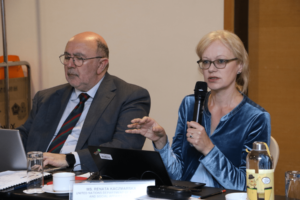
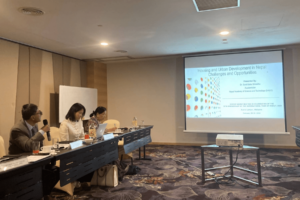
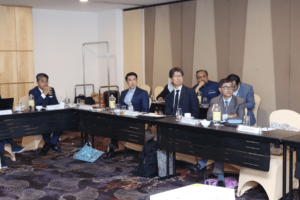
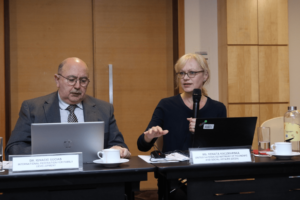
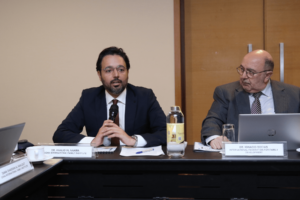
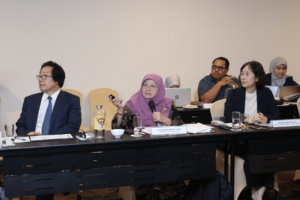
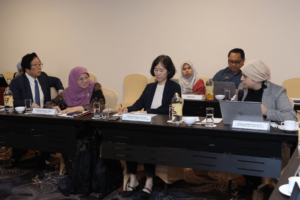
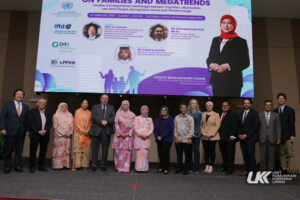
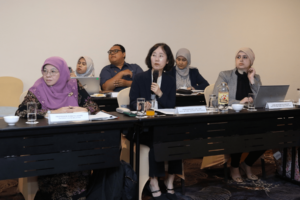
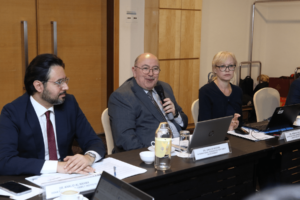
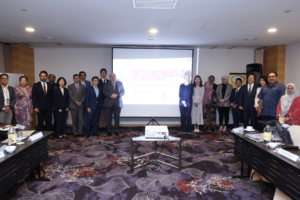
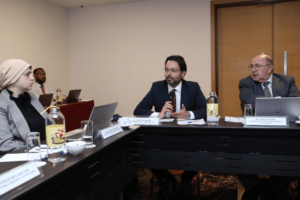
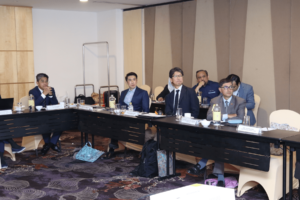
The interlinkages between migration, urbanization, climate change and technological and demographic trends were raised at an event organized by Doha International Family Institute (DIFI) a member of Qatar Foundation during the Expert Group Meeting (EGM) held in Kuala Lumpur, Malaysia. The meeting highlighted the New Urban Agenda and explored ways to achieve inclusive, safe, resilient, and sustainable cities, and envisaged several outcomes including underlining the impact of migration on transforming family structures and analyzing strategies for optimizing the benefits of technology while minimizing its drawbacks on family relationships. They also discussed the policy lessons learned from Asia that can be applied globally, and the potential contributions of global experiences to the Asian context, interlinkages between migration, urbanization, new technologies, and climate change, said the statement issued by Qatar
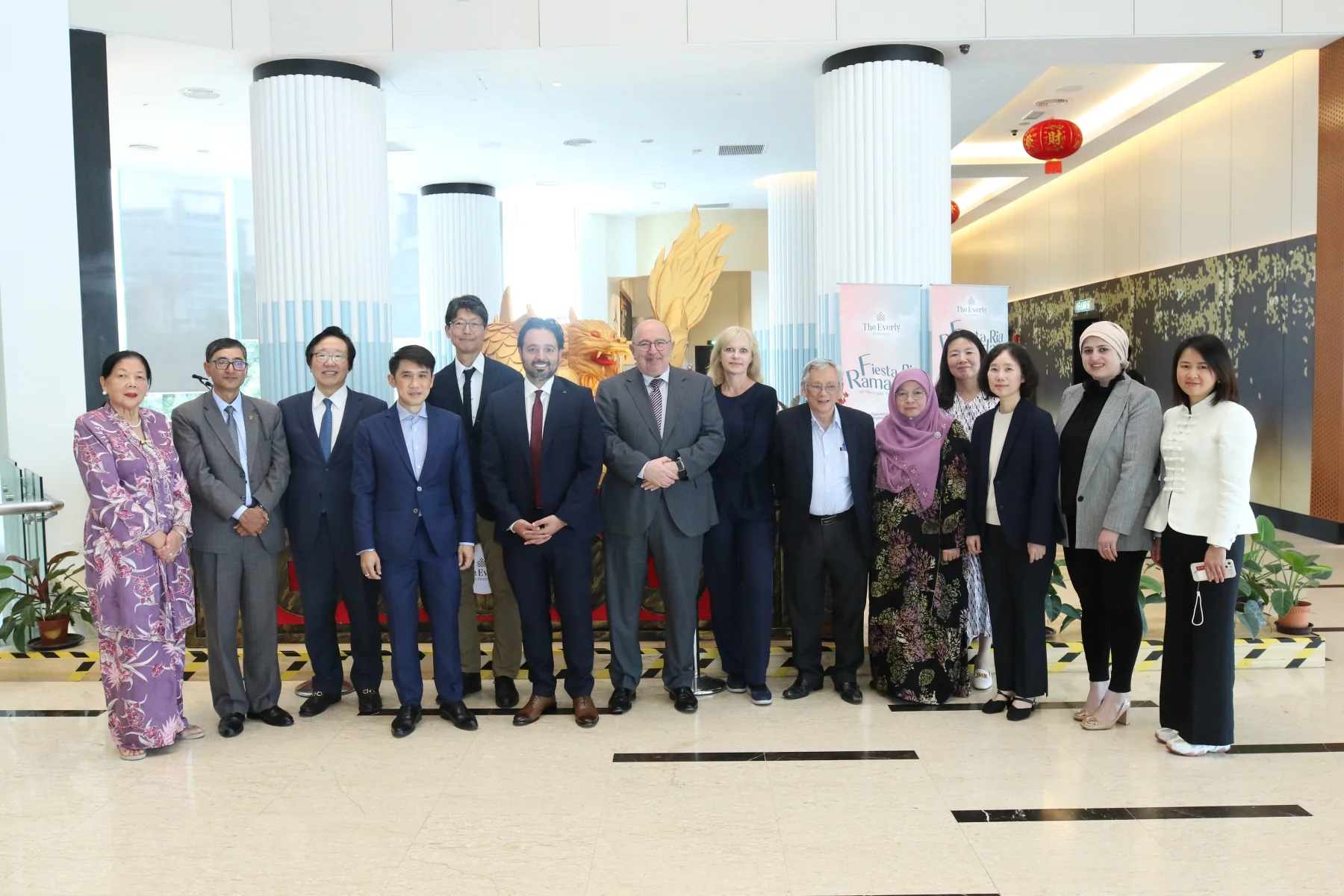
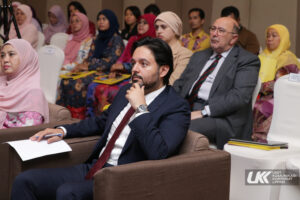
The event was held in partnership with the National Population and Family Development (LPPKN), the United Nations Department of Economic and Social Affairs (UNDESA), and the International Federation for Family Development (IFFD), the statement continued. Director General of the National Population and Family Development Board Abdul Shukur Abdullah began the event by discussing families and megatrends, and the importance of understanding a rapidly and ever-changing world. “The four mega trends require proactive responses that create opportunities and challenges to shape our present and future,” Abdullah said: “The Expert Group Meeting provides excellent opportunities for us to take the necessary measures to tackle the remaining and emerging challenges towards achieving the New Urban Agenda. Malaysia is honored to be part of this program and we hope this fruitful collaboration will continue for many years as we unite in pursuit of common goals,” he added. Director of the Family Research and Policy Department at DIFI Dr. Khalid Al-Naama said, “The profound interaction between the mega trends, and the fixed family ties, constitutes a landscape of interconnected forces.” “As individuals migrate, cities develop, technology advances and demographics shift, families stand at the heart of these transformations,” he added. Speaking about families in Asia, Director of Communication and International Relations at IFFD Ignacio Socias said that they are facing a dynamic landscape shaped by the four mega trends globally that are being studied for the 30th anniversary of the International Year of the Family (IYF). “Demographic trends influence family structures and sizes, impacting social dynamics and resource allocation. The rapid integration of new technologies transforms daily life, altering communication patterns and access to information,” he said. “Migration patterns often lead to separated families, challenging traditional support systems and cultural norms. Urbanization brings opportunities and challenges, reshaping living environments and family lifestyles affecting the well-being of Asian families.” Focal Point of the Family at the Division for Inclusive Social Development (DISD) of UNDESA Renata Kaczmarska said, “As we are celebrating the 30th anniversary of the IYF in 2024, we have been focusing on the impact of mega trends on families at regional levels. The Expert Group Meeting held in Malaysia has contributed to the understanding of the impact of mega trends on families, especially in terms of fertility and family formation in the region.” “The importance of investing in parenting education assisted by new technologies has been highlighted as needing cooperation between Government agencies, civil society, academia, and the private sector in overall family policy development and implementation,” she concluded. (QNA)
Concept note EGM
Background note EGM
Migration represents one of the most important social phenomena of the late twentieth and early twenty-first centuries. International migration and internal migration are two fundamental categories that encompass the movement of individuals across geographical boundaries. While both terms refer to the relocation of people, they differ in the scale and nature of the migration process. International migration involves the movement of individuals across national borders, resulting in a change in citizenship. This type of migration can be motivated by a variety of factors, including economic opportunities, political stability, family reunification, or the pursuit of educational or professional advancements. International migration can be further categorized as voluntary or involuntary. Voluntary migration occurs when individuals choose to relocate for personal reasons, while involuntary migration is often the result of conflict, persecution, or natural disasters. Internal migration, on the other hand, refers to the movement of individuals within the boundaries of a single country. This type of migration can be driven by factors such as rural-urban migration, urban sprawl, or the pursuit of better employment opportunities or educational facilities. Internal migration can also be influenced by government policies, regional economic disparities, and individual aspirations for a better quality of life. The distinction between international and internal migration is significant for understanding the demographic patterns, economic dynamics, and social implications of population movements. International migration has a profound impact on both sending and receiving countries, influencing labor markets, economic development, and cultural exchange. Internal migration, while primarily affecting the distribution of population within a country, can also lead to urban growth, regional disparities, and the transformation of rural and urban landscapes. Closely linked with migration is the rapid urbanization that is occurring in many parts of the world and is changing family structures. As migrants leave rural areas seeking opportunities in cities, urban areas are growing at an exponential pace. (1) Both trends have a profound impact on family life, family relationships, and family practices:
- Changes in family structures, such as smaller households and fewer multigenerational families — as people move to cities or other countries, they may leave behind extended family members and rely more on nuclear families or chosen families for support;
- Cities can provide new economic opportunities for families, such as higher- paying jobs or access to better education and healthcare, but they can also create economic challenges, such as higher living costs or difficulty finding work in the new location, overcrowded cities, slums, burden on infrastructure, etc.
- Disruption of social support networks for families, as they may be separated from extended family members, friends, and other support systems, while they may build new networks in the new location, such as through work or community organizations.
- Adaptation to new cultural norms and practices, which can be challenging, like learning a new language, adjusting to new food and customs, and navigating new social hierarchies.
The impact can be especially significant for the most vulnerable as children, older persons and persons with disability, particularly if they are forced to move due to conflict or displacement, as they may experience trauma, disrupted education, lack of mobility and other challenges that can affect their well-being and development. Young people can also be heavily affected in terms of employment, housing and family formation. In that sense, it is now more important than ever to bear in mind that integration is an investment.
(4-2) Asia has been experiencing rapid urbanization and migration in recent decades. This has led to significant changes in the social, economic, and cultural landscape of the region. Migration from Asia to Northern America and Europe drove much of the increase in the number of Asian migrants outside the region, reaching a total of more than 46 million extra- regional migrants in 2020.
(5-3) Many migrant workers leave their families behind and only return home for brief visits. This has led to the development of new family structures and relationships, with grandparents often taking on a more prominent role in the upbringing of children. In reply to these challenges, one of the biggest challenges faced by Asian cities is the need to provide adequate infrastructure and services to accommodate the growing urban population. This includes building new housing, transportation systems, and social services such as healthcare and education. Policies and programs that support migration and well-planned and well-managed sustainable urbanization are closely related to the successful realization of the United Nations Agenda 2030, as localized by the New Urban Agenda. SDG 11 emphasizes the need for inclusive, safe, resilient, and sustainable cities and communities. Ensuring that families have access to adequate housing, basic services, and infrastructure, and that they are not left behind in the process of urbanization, is crucial for achieving it, and that is the policy framework of the New Urban Agenda. Overall, the challenges posed by urbanization and migration in Asia are complex and require a coordinated effort by governments, civil society organizations, and individuals to address them effectively.
Recommendations EGM
Schedule
8:30 am
Meejung Chin (South Korea), Rumaya Juhari (Malaysia)
Renata Kaczmarska – Focal Point of the Family, UN DESA
Mr. Abdul Shukur Abdullah – Director General of LPPKN
Dr. Khalid Al Naama – Director of Family Policy and Research, DIFI
Dr. Ignacio Socias – Director of International Relations, IFFD Introduction of participants
9:00 am
Meejung Chin (South Korea), Rumaya Juhari (Malaysia)
Moderator: Ignacio Socias
10:30 am
Coffee Break
11:00 am
Bhubate Samutachak (Thailand), Rokuro Tabuchi (Japan)
Moderator: Renata Kaczmarska
12:30 pm
Lunch
2:00 pm
Ki-Soo Eun (South Korea), Ram Babu Bhagat (India)
Moderator: Dana Alkahlout
3:30 pm
Sunil Babu Shrestha (Nepal), Lishuang Chen (China)
Moderator: Dana Alkahlout
5:00 pm
End
8:30 am
Narimah Awin (Malaysia), Jong-ik Lee (South Korea)
Moderator:
Renata Kaczmarska
10:00 am
Coffee Break
10:30 am
Recommendations
Moderator: Dana Alkahlout
12:00 am
End
Research – Papers and Presentation
Future Scenarios for Thai Families in 2040
Assoc.Prof.Bhubate Samutachak, Ph.D.


Cyber Jungle Guardian, Blue Elephant
Pro. Konkuk University
Transnational Migration , Gentrification, and Displacement
Seoul National University
Fertility Decline from a Perspective of Megatrends
Seoul National University
The impact of NEW TECHNOLOGY and CLIMATE CHANGE
Dato’ Dr Narimah Awin (Malaysia)
Housing and Urban Development
China Great Wall Society, Beijing, China
Emerging Trends in Domestic Migration Patterns in Japan
Rokuro TABUCHI (Sophia University, Japan)
Navigating the Nexus: Exploring Family Challenges amidst Migration
Rumaya Juhari, Ph. D
Urban Development and Housing in Nepal: Challenges and Opportunities
Dr. Sunil Babu Shrestha
Exploring the Implications of Fertility Decline in Malaysia
Tey Nai Peng, Universiti Malaya
Biographical Notes of Participants
Prof. Meejung Chin
Seoul National University, South Korea
Prof. Ram B. Bhagat
International Institute for Population Sciences, India
Assoc. Prof. Bhubate Samutachak
Institute for Population and Social Research, Mahidol University, Thailand
Prof. Ki-Soo Eun
Seoul National University, South Korea
Prof. Narimah Awin
UNFPA Malaysia Country Office, Malaysia
Prof. Sunil Babu Shrestha
Nepal Academy of Science and Technology (NAST), Nepal
Prof. Rokuro Tabuchi
Sophia University, Japan
Prof. Rumaya Juhari
University Putra Malaysia, Malaysia
Mr. Jong-ik Lee
Blue Tree Foundation, South Korea
Mrs. Lishuang Chen
China Great Wall Society, China
Images