
Expert Group Meeting

Categories
Expert Group Meeting - Africa
About EGM
Introduction
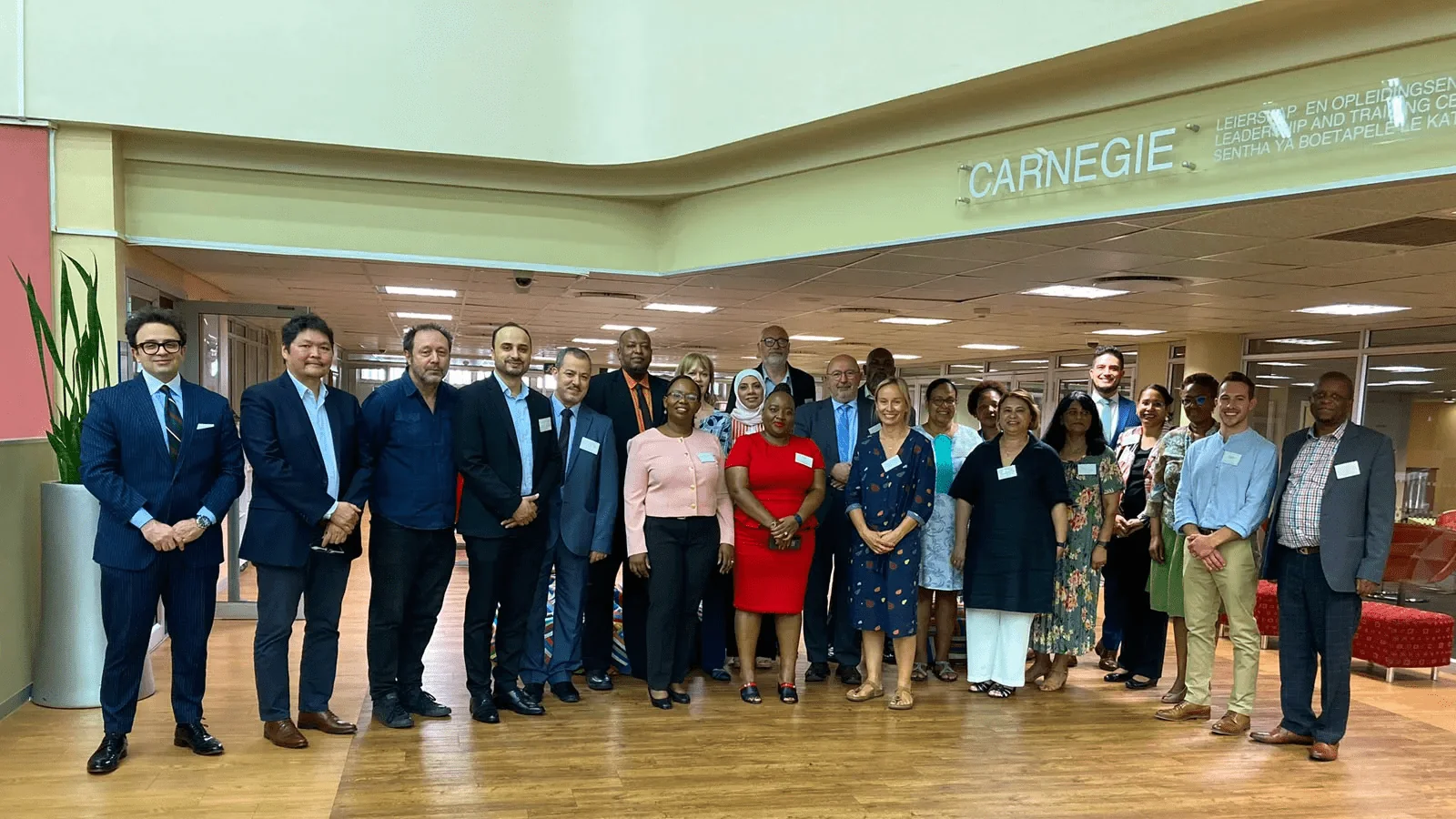
The impact of socio-economic and demographic transformation in Africa and its effect on family well-being were topics of discussion at an event organized by the Doha International Family Institute (DIFI) in preparation for the 30th anniversary of the International Year of the Family in 2024 (IYF+30).
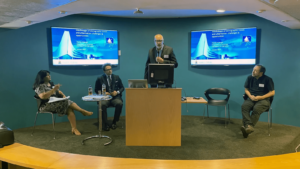
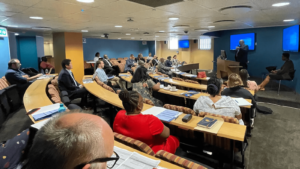
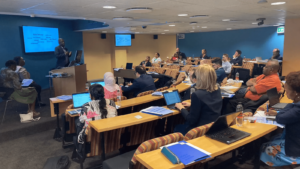
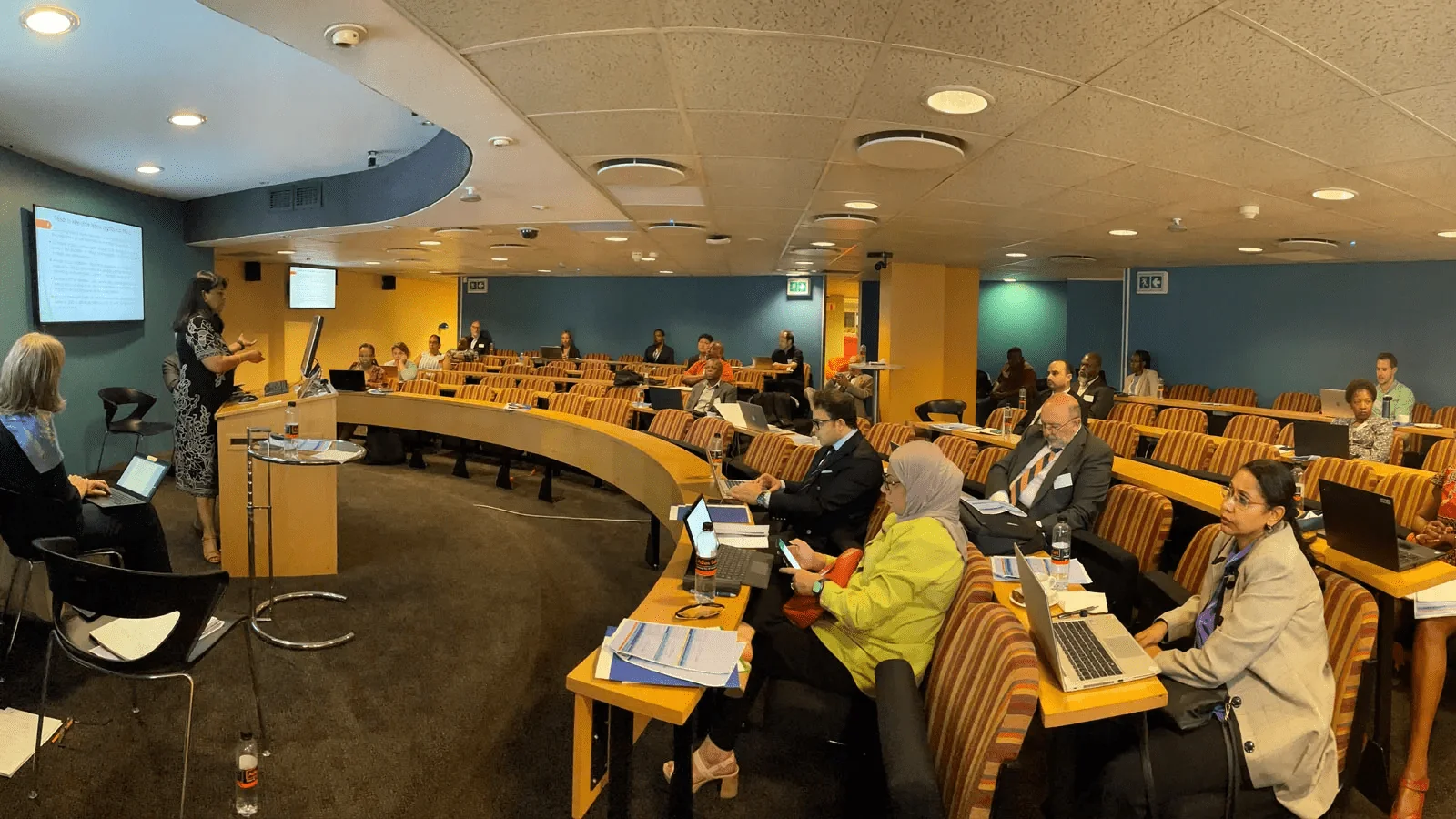
The three-day Expert Group Meeting (EGM), held in Pretoria, South Africa, in partnership with the University of Pretoria, the United Nations (UN) Department of Economic and Social Affairs (DESA) and the International Federation for Family Development (IFFD) under the theme ‘Demographic Changes and Family Wellbeing in Africa’, saw experts’ discussions around the impact of demographic changes on family wellbeing in Africa.
They also addressed the major family formation trends in Africa and how these changes affected family wellbeing, the role of technology in these changes and its impact on digital parenting, the challenges and opportunities presented by social protection policy frameworks towards supporting elderly care in the region, the interlinkages between demographic trends, migration and urbanization in contemporary Africa, and the major lessons learned in developing and implementing national and regional family policies.
Dr Sharifa Noaman Al Emadi, executive director of DIFI, highlighted the importance of focusing on family wellbeing through a comprehensive approach, which DIFI, a member of Qatar Foundation, is tackling through policy-research and mobilisation.
She emphasised the importance of focusing on family wellbeing with holistic approaches, stressing that DIFI works to enhance family wellbeing and supports the making and development of policies related to research, scientific evidence and multiple advocacy efforts.
She also noted that demographic changes, accompanied by the shrinkage of traditional interactions between nuclear and extended families because of urbanisation and the fragility of related policies, as well as declining fertility rates and other demographic challenges, mean structural treatments and policy and programme support is required based on knowledge basis.
Speaking about the preparations for the IYF+30, Renata Kaczmarska, Focal Point of the Family at the Division for Inclusive Social Development (DISD) of the UN DESA, highlighted the importance of EGM recommendations to enrich the periodic UN Secretary General’s report on the family. Ignacio Socias, director of Communication and International Relations at IFFD, outlined the importance of international programmes that support national development agendas “including the voice of parents and families in the discussion for better and holistic policy design, implementation and evaluation is extremely important.
” Professor Zitha Mokomane, professor at the Department of Sociology at the University of Pretoria, stressed that “while the important role of the family in society has been recognised everywhere in the world, it also needs to be substantiated through comprehensive family policies.”
Representative of the African Union Commission on Social Affairs Lefhoko Kesamang pointed out the need to develop Management Information Systems on the African Family for better data collection on family interventions at the regional level.
Concept note EGM
Background note
The Department of Sociology in the Faculty of Humanities at the University of Pretoria in cooperation with the Focal Point on the Family, Division for Inclusive Social Development (DISD) of the United Nations Department of Economic and Social Affairs (DESA), Doha International Family Institute (DIFI) and the International Federation for Family Development (IFFD) is organizing an Expert Group Meeting on “Demographic Changes and Family Wellbeing in Africa” to be held 23-25 January 2023 at the University of Pretoria in Pretoria, South Africa The meeting is organized as part of the preparations for the thirtieth anniversary of the International Year of the Family, 2024 (IYF+30) and will build on the findings of the Expert Group Meeting held in 2020 which recommended focusing on several megatrends to guide the preparations.
Those recommendations were reflected in the Reports of the Secretary-General (2020-2021).
In 2021, the United Nations General Assembly resolution on the Preparations for the IYF+30 endorsed those recommendations and advised focusing on the trends of new technologies, migration, urbanization as well as demographic trends and climate change as part of the preparations for IYF+30.
It is in accordance with this resolution and relevant United Nations mandates, that the Expert Group Meeting is to address demographic trends and their impact on families in Africa.
To mark the tenth anniversary of the International Year of the Family (IYF) in 1994, the African Union Commission adopted the Plan of Action on the Family in Africa which advocates for the “promotion, formulation, implementation and monitoring of policies to ensure the protection of and support to the African family so as to enable it to play its vital role more effectively in the development of Africa.”
At the time the Plan of Action on the Family in Africa was adopted, key challenges affecting the family in the region included high levels of poverty, inadequate social protection mechanisms, low levels of educational attainment, high levels of unemployment, gender inequality, rural to urban migration, displacement, family disintegration, poor sexual and reproductive health indicators and high levels of communicable diseases such as HIV and AIDS, malaria and tuberculosis.
In the three decades since the adoption of the Plan of Action, however, there have been significant socio-economic and demographic transformations that have direct and indirect implications for the well-being of families and their members in the region.
It is for this reason that a focus on the family continues to be underscored in other regional instruments such as the African Union Social Policy Framework for Africa (2009) and the African Union Agenda 2063 (2013).
The planned Expert Group Meeting provides an opportunity to share good practices on policies and programmes that have improved family well-being, take stock of remaining and new family challenges, and recommend a way forward for the post-2024 period.
Background note EGM
Recommendations EGM
Schedule
8:30 am
Pretoria
Prof. Sandy Africa, Deputy Dean; Faculty of Humanities, University of Pretoria Renata Kaczmarska, Focal Point on the Family, United Nations Department of Economic and Social Affairs
Sharifa Al Emadi, Executive Director, Doha International Family Institute Ignacio Socias, Director of Communications and International Relations, International Federation for Family Development
10:00 am
Pretoria
Lefhoko Kesamang Department of Social Affairs – African Union Commission
Zitha Mokomane Department of Sociology – University of Pretoria
Moderator: Jane Wathuta, Strathmore University, Kenya
11:30 am
Pretoria
Mohamed Mohieddin Professor of Sociology and International Consultant; Egypt
Zitha Mokomane Department of Sociology, University of Pretoria
Moderator: Nicky Roman, University of the Western Cape
1:00 pm
Pretoria
Lunch
1:30 pm
Pretoria
Sheren EL-Feki Chief of the Latin American and Caribbean Demographic Centre, Population Division of ECLAC
Elmoubasher Abu Baker Abd Farag Acting Head of Communicable Disease Control Programs, Supreme Council of Health, Qatar.
Shingairai Chigeza Department of Psychology University of Pretoria
Moderator: Ignacio Socias International Federation for Family Development
9:30 am
Pretoria
Elena Moore University of Cape Town
Dr. Achraf Othman ICT Accessibility Innovation and Research Section, Mada Center, Doha, Qatar
Moderator: Benlacence Badrane , Ibn Khaldon Center, Qatar
11:00 am
Pretoria
Mokhtar El Harras Mohamed V University, Rabat, Morocco
Pragna Rugunanan Department of Sociology, University of Johannesburg
Moderator: Renata Kaczmarska, Focal Point on the Family -United Nations Department of Economic and Social Affairs
12:30 pm
Pretoria
Lunch Break
1:30 pm
Pretoria
Moderator: Pragna Rugunanan Department of Sociology, University of Johannesburg
Ahmed Aref Doha International Family Institute • Charles Puttergill; Department of Sociology, University of Pretoria
3:00 pm
Pretoria
End
Research – Papers and Presentation
How Ageism shapes the digital divide among older persons in Qatar
Dr. Achraf Othman


Interlinkages between Demographic Trends and Urbanization in North Africa
Ahmed Aref
Challenges and Advantages in Contemporary Africa, with Special Focus on North Africa
Badrane Benlahcene
Family Policy Development in South Africa
Prof S Tanusha Raniga and Lauren Graham
Regional Expert Group Meeting on “Demographic Changes and Family Wellbeing in Africa
Patterns of Marriage and Divorce in North African Countries
Mohamed Mohieddin
Migration and Demography in Africa: Interlinkages, Challenges and Opportunities
Mokhtar El Harras
Parenting in the Digital Era
Demographic Changes and Family Wellbeing in Africa
Biographical Notes of Participants
Images